Positive Psychology & Strength‑Based Therapy | Pod Health
Learn how positive psychology and strength‑based psychotherapy improve resilience, well‑being, and trauma recovery. Evidence‑based tools from Pod Health.
---
Positive Psychology & Strength‑Based Therapy | Pod Health
---
Building What’s Strong: Positive Psychology & Strength‑Based Psychotherapy
Positive psychology and strength‑based psychotherapy are two of the most effective, research‑supported approaches for improving well‑being, resilience, and long‑term mental health outcomes. At Pod Health, we integrate these methods into our trauma‑informed, movement‑forward model to help clients build lives that feel meaningful—not just manageable.
This guide explains what these approaches are, why they work, and how they support trauma recovery, OCD treatment, and whole‑person wellness.
---
---
What Is Positive Psychology?
Positive psychology is the scientific study of human strengths, resilience, and well‑being. Instead of focusing solely on symptoms, it explores:
• What helps people thrive
• How meaning and values shape behavior
• How strengths support recovery
• How positive emotion broadens attention and increases flexibility
A helpful explainer video:
“What Is Positive Psychology? From Disease to Prevention”
https://www.youtube.com/watch?v=1qJvS8v0TTI
For deeper reading:
“Positive Psychology: An Introduction” (Seligman & Csikszentmihalyi)
https://positivepsychology.com/what-is-positive-psychology-definition/
---
What Is Strength‑Based Psychotherapy?
Strength‑based psychotherapy focuses on identifying and amplifying a client’s existing strengths, including:
• Values
• Skills
• Past successes
• Social supports
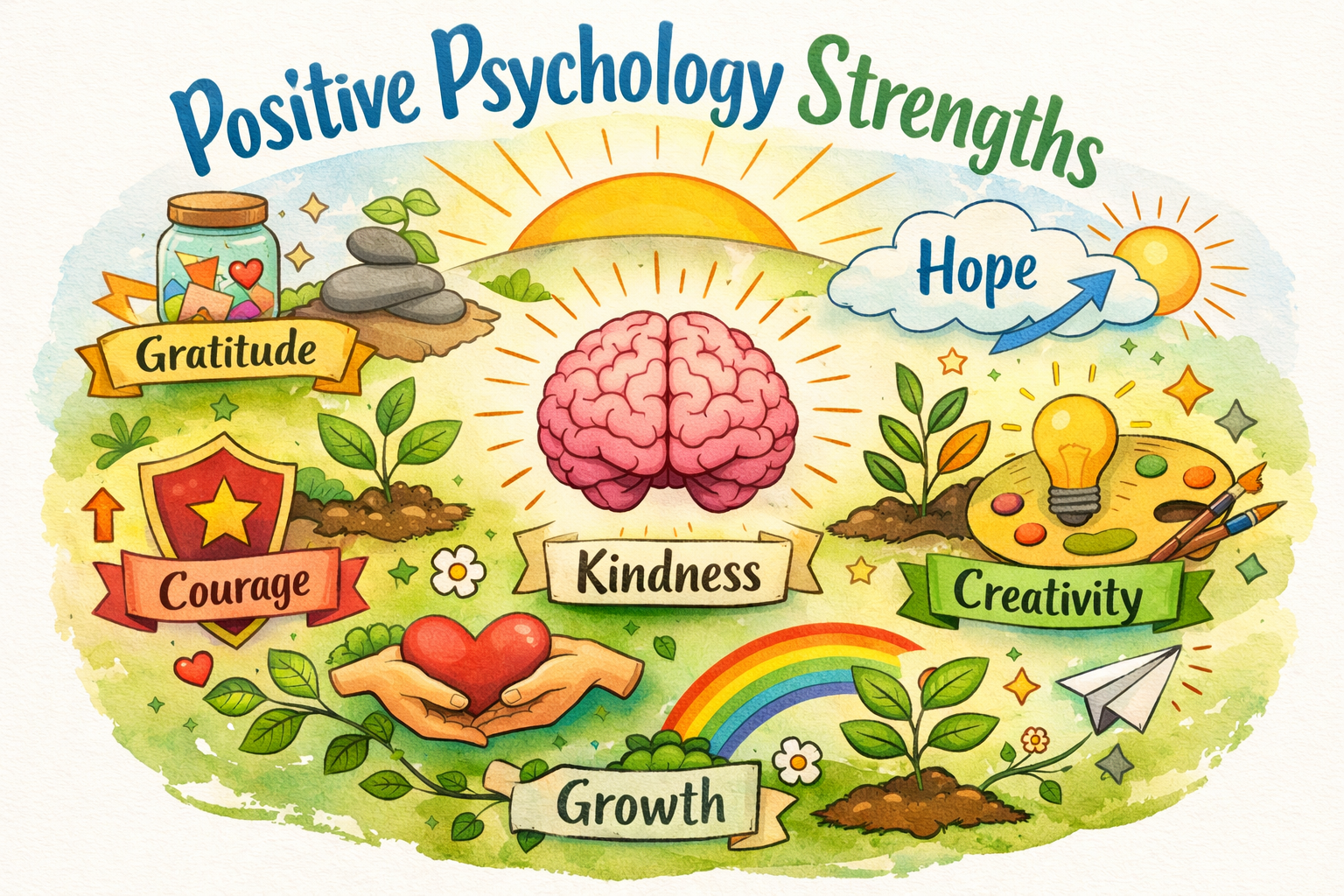
• Personal qualities (courage, persistence, creativity, compassion)
A strong overview:
“How to Perform Strengths‑Based Therapy and Counseling”
https://positivepsychology.com/strengths-based-therapy-counseling/
This approach is especially effective in trauma treatment, ERP for OCD, and ACT‑based interventions because it increases agency, motivation, and psychological flexibility.
• Strength activation increases motivation, especially during difficult behavioral tasks
• Hope and agency reduce avoidance, a core driver of anxiety and trauma symptoms
• Strengths buffer stress, improving physiological resilience
• Values‑aligned action increases long‑term adherence to treatment
These mechanisms align directly with CBT, ERP, CPT, WET, and ACT—making strength‑based work a natural fit for Pod Health’s integrative model.
---
Videos That Bring These Concepts to Life
• A Strengths‑Based Approach to Therapy
https://www.youtube.com/watch?v=JxWQ1iWJt9E (youtube.com)
• Positive Psychology – Character Strengths
https://www.youtube.com/watch?v=QGvR_0mB8xA (youtube.com)
• How to Apply Positive Psychology: Counseling Role Play
https://www.youtube.com/watch?v=V7x1YgnFz0E (youtube.com)
---
How Pod Health Uses Strength‑Based Approaches
At Pod Health, we integrate positive psychology and strength‑based psychotherapy into:
• Trauma treatment (CPT, WET, ACT‑based trauma work)
• OCD treatment (ERP supported by courage, values, and mastery experiences)
• Movement‑based interventions that build agency and physiological resilience
• Process‑based therapy targeting mechanisms like avoidance, rigidity, and disconnection
To learn more about how strengths support trauma recovery, explore this related Pod Health post:
👉 Understanding Physiological Resilience: How the Body Learns to Feel Safe Again
https://www.podhealthllc.com/blog/physiological-resilience (podhealthllc.com in Bing)
---
Strength‑Based Exercises You Can Use Today
• Strengths Spotting — Identify strengths embedded in past successes
• Values‑Aligned Action — Choose one small action that expresses a core value
• Savoring — Pause to fully notice a positive moment
• What’s Working Check‑In — Start sessions by identifying one thing that went well
These practices build momentum, confidence, and psychological flexibility.
---
Final Thoughts
Positive psychology and strength‑based psychotherapy remind us that healing is not only about reducing distress—it’s about building capacity, resilience, and vitality. At Pod Health, we help clients uncover their strengths and use them as fuel for meaningful, sustainable change.